SEO for AI websites: how I got 450+ pages indexed on Google
Google doesn't treat AI-built sites differently. Here's the structure, checklist and Search Console setup that got more than 450 of my pages indexed.
On this page
SEO for AI websites works exactly like SEO for any other website, and that's the point. My site, built with the help of AI, has more than 450 pages indexed on Google and over 18,000 impressions in 28 days, all organic. Here's how I structured it, and the checklist you can hand to your AI.
Watch the video
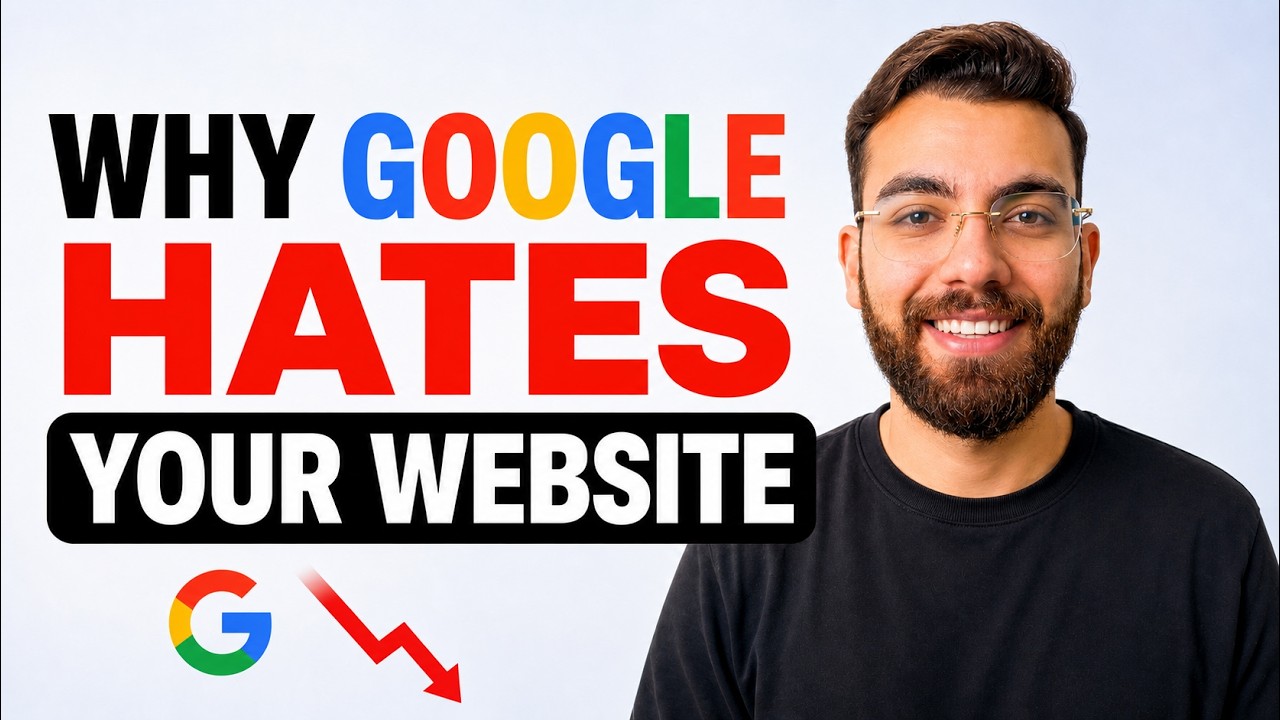
▶ Watch "How to Do SEO for Your AI Website (2026 Full Guide)" on YouTube
There's no such thing as an "AI website"
First, a mindset fix. It isn't an AI website. It's a website built with the help of AI.
Google doesn't treat a site built with Lovable, Cursor, Bolt, Replit or Claude Code any differently from one built on WordPress or Shopify. It asks two questions: can it crawl your website, and can it understand it?
AI just makes you much faster. Websites are still code, like they were in 2001. Back then, one hand-coded site could take two months. Now I can build an ecommerce site with a database and products in under 30 minutes.
WordPress and Shopify don't rank you automatically
WordPress and Shopify are content management systems (CMSs). They give non-technical people a friendly dashboard. That's useful, but it isn't an SEO advantage.
Skip a proper page hierarchy on WordPress, and you won't rank. Ignore your URL structure and on-page content on Shopify, and you won't rank. Most AI-built sites that fail don't fail because of AI. They fail because the creator skipped the structure.
How Google crawls your site
You submit your site to Google. Google sends a crawler to your homepage, which follows your links and your sitemap to every page, checking structure and content as it goes. Then it decides what to index.
And what does Google want? A good experience for people: fast loading, mobile-friendly pages, no errors, a clear menu, and buttons that lead to real pages. Build for the human, and you're building for Google.
The checklist to give your AI
You don't need to do this by hand. Give your AI a checklist like this and ask it to implement it.
Structure and content
- One H1 per page, with a proper heading hierarchy below it
- A clear site structure: home, services, portfolio, about and legal, each with its own sub-pages
- A clean menu, like a services dropdown plus clear call-to-action buttons
- Breadcrumbs
Friendly URLs
- URLs that explain where you are, like
/services/web-developmentor/locations/bath
Technical
- Fast page loading
- A sitemap at
yourdomain.com/sitemap.xml, with page priorities
Google Search Console
- Create a free account, verify your domain, then open Sitemaps and submit your sitemap URL
- Use it to track impressions, clicks, CTR, search queries, top pages, countries and devices
Ecommerce sites need their own checklist. Ask ChatGPT to create one and hand it to your AI.
My results
- 454 pages indexed
- About 18,400 impressions and 45 clicks in 28 days
- Real search queries, like website development services in specific UK towns
My average position is still low and my click-through rate needs work, but the site is new and it hasn't been my priority. With consistent work, it can reach page one.
A big part of the page count is more than 300 location pages that all follow the same structure, like /locations/brixton/social-media-management, each with city-specific text, an FAQ and a contact form.
Keywords: be precise, not repetitive
SEO isn't putting your keyword everywhere. Your site needs to say clearly what problem it solves.
If you run a web development agency, "Build your digital future with innovative solutions" says nothing. "AI web development agency for small businesses" says exactly what you do.
Build pages around what customers actually search for. You can find those terms in Search Console or tools like SEMrush and Moz. For an agency, that might mean sections for AI web development, web development services, client portal development and AI automation services.
AI isn't the problem. Low-value content is. Niche down and speak directly to one audience.
Why build with AI at all?
Flexibility and time. With a custom build, you can do almost anything. Shopify limits how much you can customize, and WordPress is more flexible but still has limits. An expert might spend a week on a WordPress or Shopify site, while AI can produce hundreds of well-structured pages in an hour or two. That's programmatic SEO with AI.
Good SEO for AI websites comes down to structure, clarity and speed. For more on speed and clarity, read why 3D websites don't convert, and for the words on the page, avoid these copywriting mistakes.
If you want to learn AI web development in depth, my community takes you from beginner to pro: AI Engineer Academy. Here's what's inside.
Follow along
- YouTube: @AgenticAli
- LinkedIn: Ali Amin
- X: @AgenticAli
- Instagram: @agenticali
- Skool: AI Engineer Academy
Keep building.
Ali Amin